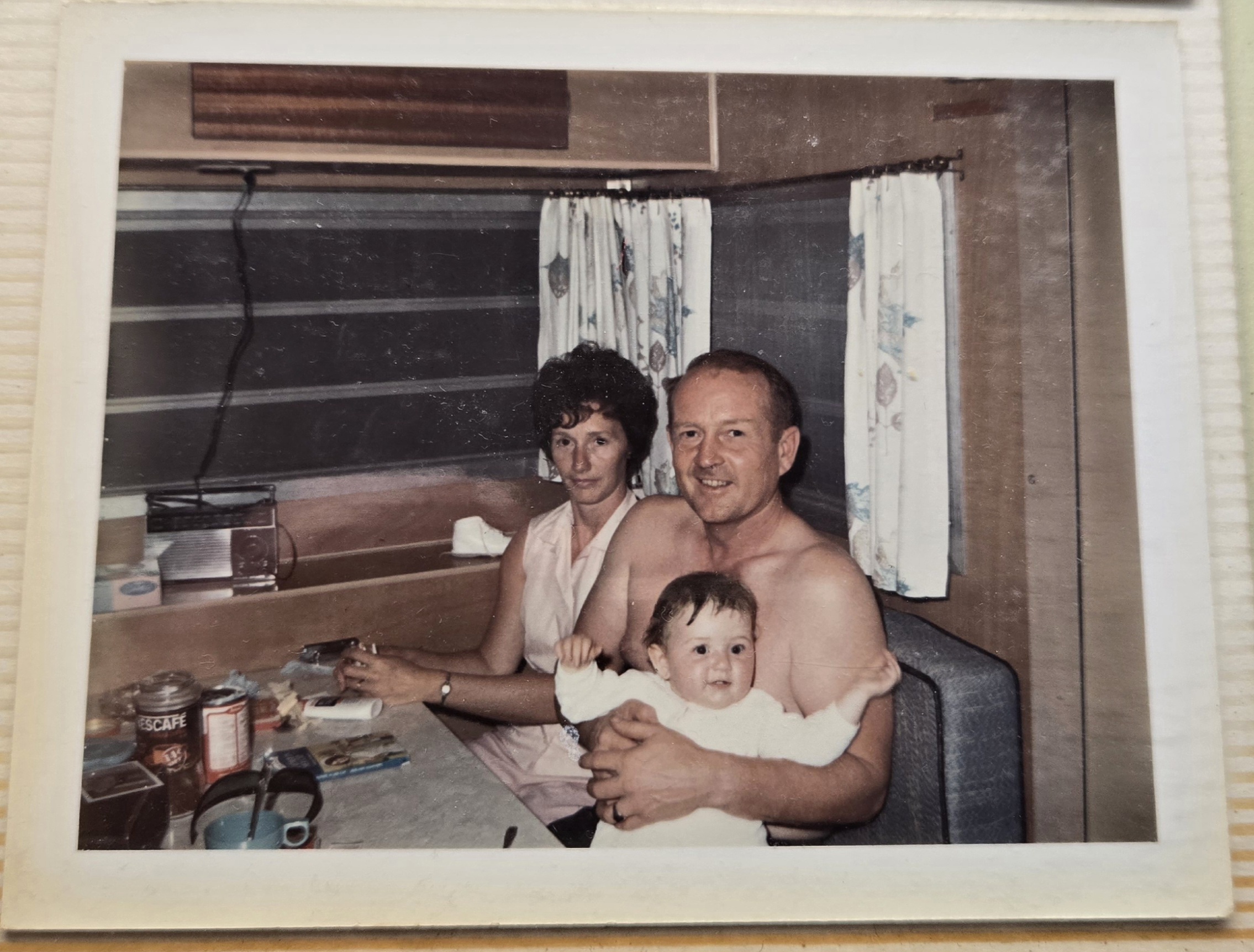
That’s me, Lori with my parents in the photo above.
Editor’s Note: September 10 is World Suicide Prevention Day. A warning: this post, which first published on July 18, 2024 deals with suicide.
Before I could move forward, I had to take a hard look at why I resisted acknowledging my burnout and for so long. And why was I so ashamed to tell people? For the first several weeks of being off work, I didn’t tell anyone and I actually hid in my home. Perhaps I was embarrassed that I wasn’t strong enough to work through this?
Honestly, I was so burned out, brain filled with a fog so deep I have no idea what I was thinking.
I do know I was well aware of the stigma when it comes to mental health.
My beloved father died by suicide decades earlier.
How could I possibly judge myself so harshly when I had championed at every opportunity the importance of “breaking the stigma” and normalizing mental health? Through tears, I remembered my father who had bravely acknowledged his pain and sought help in the 1980’s.
I’ll never forget the day I lost him. I was 15 years and Christmas was only a few days away. He had suffered bouts of depression throughout his life and had recently been released from hospital treatment. This despite advising of his intentions to end his life if he was discharged. In his darkness, he truly believed our family would be better off without him.
I remember our last hour together. I was attending high school and he picked me up for lunch. We ate together and I headed back to class. Little did I know this was my forever good-bye. I still get a lump in my throat as I think about it.
As I made the 15 minute walk to my high school in the small village I grew up in, I remember hearing the ambulance siren and a chill went up my spine. I would soon learn that my life would be forever changed. My father was gone.
The aftermath of that tragedy was profound both at the time and even now, some 40 years later. Surviving a loss by suicide is a grief like no other. There’s complicated feelings of sadness, loneliness, along with guilt, confusion, shame, anger. Let’s not forget the harmful effects of stigma and trauma that still exist today.
People treated me differently after his death. I’m sure some were well intentioned; they just didn’t know what to do. But for a 15 year old processing such an horrific event, it was an isolating time. The religious stigma was particularly painful because suicide was viewed as a sin. It was only through therapy a few decades later that I was able to find peace in spite of my great loss.
You might ask why it took me twenty years to seek counseling. There was a variety of reasons, I suppose. There really weren’t many supports available in the late 1980’s, at least none that I was aware of. Our family certainly deserved more community support than it got.
I also believed that if I just pushed through grief, all would be fine. Like most emotions, when you bottle them up, they eventually find a way to the surface and must be addressed. It was freeing to finally rid myself of some of those complex feelings surrounding Dad’s death.
So, back to me and my present day struggle with burnout and PTSD. According to Statistics Canada, “1 in 5 adults reported moderate to severe symptoms of depression, anxiety or PTSD in the fall of 2020. This figure increased to 1 in 4 by early 2021 and remained the same in 2023”. Statistics don’t lie. Mental health issues are more common than we’d like to admit. We really need to let go of the notion that it’s a sign of “weakness” or that it’s “selfish”.
Deep down I realized that for all the lip service we pay to mental health awareness, have we really come that far? There is so much work to be done. I’m hoping that by sharing my story, my discomfort and pain from the loss, I will pave the way for someone to seek the help they need and deserve.
The following mental wellness resources are available in Canada free of charge:
9-8-8: Suicide Crisis Helpline
Call or text 9-8-8 for free access to suicide prevention support for people in Canada 24/7/365
Wellness Together Canada
Toll-free: 1-866-585-0445
Text WELLNESS to:
686868 for youth
741741 for adults
To access more stories like this from the Disentanglement.ca archives, become a FREE member in community.